.png)
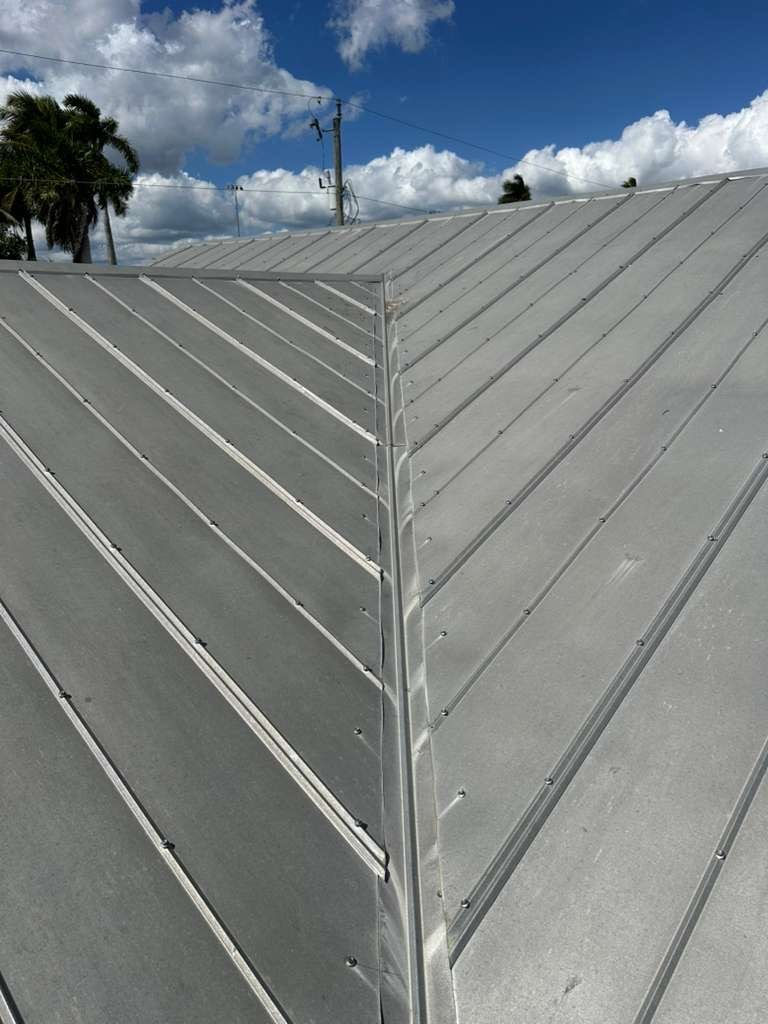
Metal roofs leak for a short, predictable list of reasons — and on properly installed standing seam, leaks are uncommon because the fasteners are concealed. The usual culprits are exposed-fastener washer failure on through-fastened systems, flashing and penetration details, seam problems, and damage. Understanding which category applies is the first step to a lasting repair, because a metal roof leak is almost always a detail or a fastener issue rather than a failure of the panels themselves.
Exposed-Fastener Washer Failure
On 5V-crimp, corrugated and other through-fastened roofs, each screw relies on a sealing washer. UV and thermal cycling harden and shrink those washers over years, and screws can back out slightly as panels expand and contract. The result is dozens or hundreds of small potential leak points. This is the single most common metal-roof leak pattern — and it is why exposed-fastener roofs need periodic fastener maintenance. Standing seam avoids it entirely by concealing fasteners.
Flashing and Penetrations
As with any roof, transitions are the vulnerable points: roof-to-wall flashing, endwall and sidewall details, valleys, and penetrations like pipes and equipment curbs. Improperly formed or sealed flashings, or sealant relied upon where a formed metal detail was needed, are frequent leak sources on otherwise sound metal roofs.
Seam and Installation Issues
Standing seam depends on correct seam engagement — snap-lock seams fully seated, mechanically seamed panels properly crimped. Incomplete seaming, or clip spacing and thermal-movement details done wrong, can allow water intrusion or panel distortion over time.
Damage
Wind, foot traffic, falling limbs and impact can dent, puncture or displace panels and flashings. Coastal corrosion can also perforate steel where coatings are compromised.
Repairing Metal Roof Leaks
Because most metal leaks are detail or fastener problems, many are repairable without replacing panels: replacing failed fasteners, reworking a flashing, re-seaming a section. Whether panels can be individually replaced depends on the system. Diagnosis — ideally with attic inspection to trace the water path — comes first.
Metal Roof Repair in Naples
Craft Roofing (Florida Certified General & Roofing Contractor, CGC1540219 & CCC1336696) diagnoses and repairs metal roof leaks throughout Naples and Southwest Florida.
Related Questions
Is a metal roof good for a Florida home?
Yes — metal roofing performs very well on Florida homes when properly specified and installed. Its strengths line up with Florida's demands: strong wind performance (especially concealed-fastener standing seam), efficient shedding of heavy rain, long service life, and reflective finishes that help with heat. Near the Gulf, aluminum is the preferred metal because it does not rust the way steel can when its coating is compromised by salt air. The main considerations are cost — metal typically sits at or above tile — and the importance of correct installation, since metal's advantages depend on proper attachment, seam engagement, flashing detail and thermal-movement accommodation. For contemporary and luxury Naples homes in particular, standing seam metal has become a common, high-performing choice.
Is a metal roof better than a tile roof?
Both are excellent Florida roofs, and neither is universally better — the right choice depends on the home, budget and priorities. Tile delivers the classic Naples look, exceptional surface durability and decades of service, but it is heavy (a structural consideration), requires disciplined maintenance (no pressure washing, careful foot traffic), and its real lifespan is governed by the underlayment beneath. Standing seam metal offers strong wind performance with concealed fasteners, efficient rain shedding, long service life and a contemporary aesthetic, with aluminum handling coastal salt air well — but it typically costs at or above tile and demands precise installation. Homeowners who want the traditional tile appearance and have the structure for it often stay with tile; those drawn to a modern look, top-tier wind performance, or lower long-term maintenance often choose metal. Both reward correct specification and installation over the cheapest bid.
Is aluminum roofing good near the coast?
Aluminum is the preferred roofing metal near the coast, precisely because it resists the corrosion that salt air causes. Steel depends on a protective coating; where that coating is scratched, cut at panel edges, or penetrated by fasteners, salt air attacks the exposed steel and rust blooms at those points. Aluminum does not rust — it forms a stable protective oxide layer instead — so it holds up far better in the salt-laden air within the first blocks of the Gulf and, to a lesser degree, well inland where salt still travels on the wind. For coastal and near-coastal Naples, Marco Island and Bonita Springs homes, aluminum standing seam with a quality factory finish and stainless fasteners is a sound specification. The trade-off is that aluminum is less rigid than steel of similar thickness, so panel profile and clip spacing are engineered to suit.
What is Kynar/PVDF metal roofing?
Kynar (a brand name for PVDF, polyvinylidene fluoride) is a premium factory-applied coating for metal roofing panels, valued for its outstanding resistance to fading and chalking under UV — which makes it well-suited to intense Florida sun. It sits above SMP (silicone-modified polyester) coatings in performance and price. On a metal roof, the coating is what preserves color and appearance over decades; a PVDF/Kynar finish holds its color substantially longer than lesser coatings, which is why it is commonly specified on higher-end and coastal installations where long-term appearance matters. When comparing metal roofing bids, the coating type is a meaningful line item — two otherwise similar panels with different coatings will age very differently in Southwest Florida sun. Craft Roofing can specify coating quality appropriate to the project and exposure.
Can individual metal roof panels be repaired?
Whether individual metal panels can be repaired or replaced depends on the system. On through-fastened roofs like 5V-crimp, an individual damaged panel can often be unscrewed and replaced relatively directly, and localized damage can be repaired. On standing seam, panels interlock, so replacing one panel in the middle of a run can require unseaming adjacent panels — more involved, but frequently still possible, particularly near edges. In many cases, though, a metal roof “leak” does not require panel replacement at all, because the problem is a failed fastener washer, a flashing detail or a seam issue that can be corrected without touching the panels. The right approach starts with diagnosis: identify whether the issue is a detail, a fastener, or actual panel damage, then scope the least invasive effective repair. Craft Roofing diagnoses and repairs metal roofing throughout Naples and Southwest Florida.