.png)
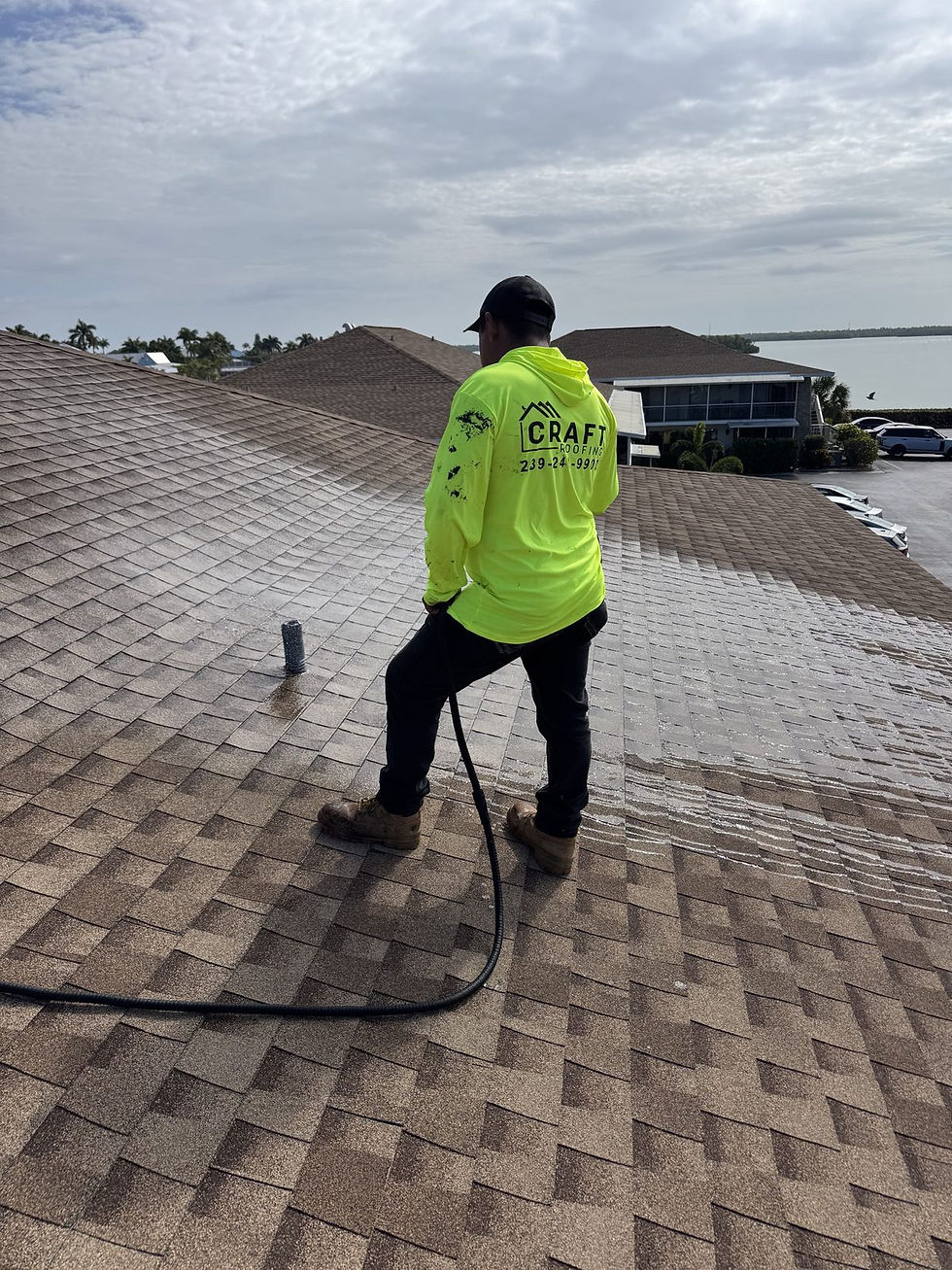
Roofers find leaks by working from both sides of the roof: examining the roof surface for failed components, and examining the attic for water paths on the underside of the deck. Because water can travel a long way between where it enters and where it appears on a ceiling, the goal of diagnosis is to identify the entry point — not just the wet spot.
Start With Where the Water Shows Up
The location of an interior stain narrows the search but rarely ends it. Water follows the slope of the underlayment, rafters and battens, so the entry point is usually upslope of the stain — sometimes directly above it, often not.
The Attic Inspection
From inside the attic, staining, mineral trails and darkened decking on the underside of the roof reveal the path water has taken. Following that path upslope typically leads to a valley, a wall line, a penetration or a vent. This is why an attic inspection is often the fastest route to an accurate diagnosis.
The Rooftop Inspection
On the roof, the inspector checks the usual suspects in the suspect area: cracked, slipped or displaced tiles; the condition and laps of valley metal; roof-to-wall and chimney flashing; vents and their fasteners; penetration seals; and any visible underlayment condition at eaves and openings. On tile roofs, tiles may be lifted in a targeted area to view the underlayment directly.
When the Source Is Not Obvious
Some leaks only appear under specific conditions — wind-driven rain from one direction, or prolonged saturation. In those cases, controlled water testing of individual details, one at a time, isolates the entry point. Occasionally the source is not the roof at all: stucco cracks, window flashing and clogged gutters can produce interior stains that mimic roof leaks, and part of diagnosis is ruling those out.
Documentation
Good diagnosis ends with photos: the entry point, the water path and the recommended correction, so the property owner can see exactly what was found before authorizing a repair.
Damage Isn't Always Obvious From the Ground
We've inspected a condominium property near Sam Snead's Tavern at Lely Resort with clear wind-related roof damage that wasn't obvious from the ground at all — the hardest part wasn't finding that damage existed, it was working out when it actually happened. That's exactly why a proper inspection looks past the visible surface.
Leak Diagnosis in Naples and Southwest Florida
Craft Roofing (Florida Certified General & Roofing Contractor, CGC1540219 & CCC1336696) performs roof and attic leak investigations throughout Naples, Collier County and Southwest Florida, including difficult and recurring leaks that have resisted previous repair attempts.
Related Questions
Can cracked concrete roof tiles cause a leak?
Yes, though usually indirectly. A cracked concrete tile rarely causes an immediate leak because the underlayment beneath it continues to shed water. The problem is what the crack exposes: direct sun and rain now reach the underlayment, which ages it far faster than it would age under intact tile. Over time, that localized deterioration — or a crack that channels concentrated water onto a weak spot, a lap or a fastener penetration — becomes a leak. Cracked pieces can also shift and dam water sideways under adjacent tiles. Replacing cracked tiles promptly is inexpensive compared to the underlayment repair that neglect eventually requires, and any interior stain below a known cracked tile warrants an inspection of the underlayment in that area, not just a tile swap.
What is roof-to-wall flashing?
Roof-to-wall flashing is the metal detail installed where a roof surface meets a vertical wall — for example, where a lower roof dies into a second-story wall or a chimney chase. Its job is to catch water running down the wall and off the roof at that intersection and direct it back onto the roof surface and underlayment, rather than letting it slip behind the roofing into the structure. On Southwest Florida homes it typically works together with the wall's stucco and waterproofing. Roof-to-wall intersections are among the most common leak locations we diagnose in Naples: flashing that was omitted, installed without proper integration into the wall, or compromised by stucco cracks and failed sealant lets water in at a point where it travels far before appearing inside. Repairs involve removing roofing at the wall line, installing or correcting the flashing, and restoring the roofing and wall interface.
What is valley metal on a tile roof?
Valley metal is the formed metal channel installed where two roof planes meet at an inside angle — the valley — which concentrates the runoff of both planes into a single path. On a tile roof, the valley metal sits over the underlayment and beneath the tile edges, carrying that concentrated water down to the eave. Because valleys handle more water than any other part of the roof, valley metal condition matters enormously: corrosion, improper laps, insufficient width, or debris damming the channel can force water sideways under the tile and onto aging underlayment. Valley problems are one of the most frequent sources of tile roof leaks in Naples, and valley metal replacement — lifting the tile along the valley, installing new metal, and relaying the tile — is a common, effective repair.
Why do roof valleys leak?
Valleys leak because they carry the most water on the roof, so any weakness there gets found quickly. The usual causes: corroded or perforated valley metal, laps installed against the flow of water, valley metal that is too narrow for the volume it carries in heavy Florida rain, debris — leaves, broken tile pieces, ridge mortar — damming the channel and pushing water sideways under the tile, and underlayment at the valley edges that has aged out. Naples rainy-season storms can put an extraordinary volume of water through a valley in minutes, which is why valley problems that might stay hidden in a drier climate show up as interior stains here. Keeping valleys clear of debris and replacing corroded valley metal before it perforates are two of the highest-value maintenance items on a tile roof.
Why do roof vents leak?
Roof vents leak for three main reasons: the vent body corrodes through, the flashing where the vent meets the roof fails, or wind drives rain in through the vent opening itself. In Naples, corrosion is the big one — galvanized off-ridge vents rust, faster near the Gulf where salt air accelerates it, and once the metal perforates, every rain puts water directly onto the deck. Failed sealant and fasteners around the vent flange are the second pattern, and storms can also bend or displace vents so they no longer shed properly. The repair is usually straightforward: replace the corroded vent with a new one (aluminum holds up better in coastal exposure), integrate its flange correctly with the surrounding underlayment and tile, and check the decking beneath for water damage while it is open.
Can a tile roof leak even when the tiles look fine?
Yes — and this is one of the most important things for tile roof owners to understand. Concrete roof tile is only one component of a tile roofing system. Water intrusion can originate from underlayment, valleys, wall flashing, roof penetrations, vents or deteriorated decking even when the visible field tile appears serviceable. The tile is a shedding surface; the underlayment beneath it is the waterproofing layer, and its condition cannot be judged from the street. A thirty-year-old roof with pristine-looking tile can have brittle, cracked underlayment leaking in multiple places, while a roof with a few chipped tiles can be perfectly dry underneath. This is why tile roof leak diagnosis involves lifting tiles and inspecting the attic — and why a good-looking tile field is not evidence that a roof has years left.
What happens if the plywood underneath a tile roof is rotten?
Rotten plywood decking has to be replaced — there is no repair that legitimately leaves decayed decking in place under new roofing. The decking is what the entire roof system fastens to; soft, delaminated or rotted plywood cannot hold fasteners and continues to decay. During a repair, the tile and underlayment over the affected area are removed, the compromised sheets are cut out and replaced with new plywood fastened to current requirements, and the waterproofing and tile are rebuilt over it. Rot is usually localized to old leak paths — valleys, wall lines, around penetrations — rather than the whole deck. It is discovered either during a leak repair, during an attic inspection (staining and sagging visible from below), or at tear-off during a reroof. The presence of rot also answers a diagnostic question: water has been getting in at that location for a long time.
Why is water showing up far away from the actual roof leak?
Because water travels between where it enters the roof and where it finally drops onto a ceiling. Once past the tile, water runs downslope along the underlayment; once past the underlayment, it follows the top of the decking, then rafters, truss chords, and even wiring or ductwork — any path gravity offers — before it finds a low point and appears inside. On a tile roof the horizontal battens can carry water sideways as well. The result: a stain in the middle of a room whose entry point is a wall flashing or valley many feet upslope, sometimes on a different roof plane. This is why repairs aimed at the roof directly above a stain so often fail, and why proper diagnosis traces the water path — typically from inside the attic — back to the true entry point before any repair is scoped.
Does Craft Roofing provide emergency roof repairs in Naples?
Yes. Craft Roofing provides emergency roof repair services in Naples and throughout Southwest Florida for active leaks, storm damage and sudden roof openings. Emergency response typically means stopping the water first — temporary dry-in, tarping, or an immediate localized repair depending on conditions and weather — followed by a documented inspection and a written scope for the permanent repair. If your roof is actively leaking, move belongings out of the drip zone, catch water in containers, and if the ceiling is bulging with trapped water, relieving it carefully at the low point prevents a larger collapse; then call or text 239-241-9900. Craft Roofing is a Florida Certified General & Roofing Contractor, License CGC1540219 & CCC1336696.
Does Craft Roofing install emergency roof tarps?
Yes. Craft Roofing installs emergency tarps and temporary dry-ins on storm-damaged and leaking roofs in Naples and Southwest Florida. A properly installed tarp — secured so wind cannot work it loose, lapped so water sheds over rather than under it — protects the interior until a permanent repair can be performed and inspected. Tarping is a temporary measure, not a repair: it buys time, particularly during rainy season or in the busy period after a storm, and it should be followed by a documented inspection and permanent repair scope. After a widespread storm event, tarping demand spikes across the region; photographing your damage and getting on a licensed contractor's schedule early matters. Call or text 239-241-9900.