.png)
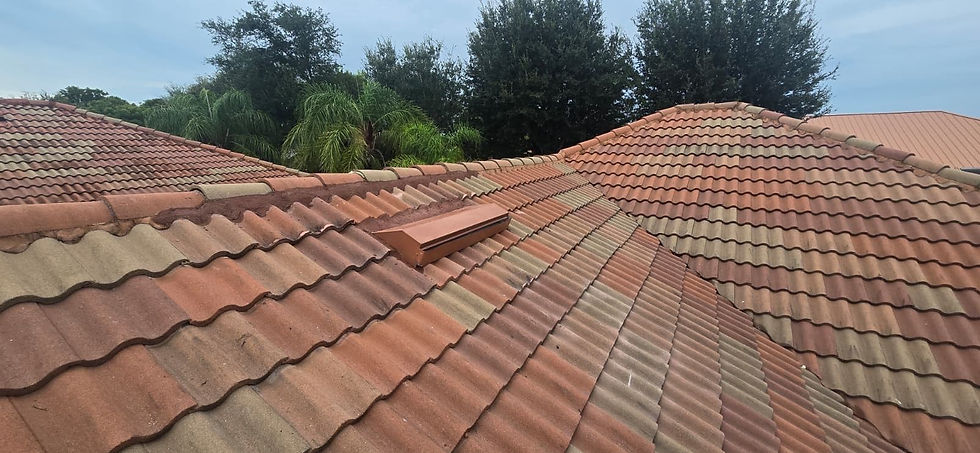
The roof leaks we diagnose most often in Naples come from a fairly short list: underlayment that has aged out, failed or missing flashing details, valley problems, corroded roof vents, cracked or displaced tiles, deteriorated penetration seals, and wind damage from thunderstorms or tropical weather. Southwest Florida's combination of heat, UV, near-daily summer rain and occasional high wind accelerates all of them.
Aged Underlayment
On tile roofs, the underlayment beneath the tile is the true waterproofing layer. Decades of attic heat make older felt underlayments brittle, and once they crack or tear, rainwater reaches the deck. This is the single most common root cause behind chronic leaks on older Naples tile roofs.
Flashing Failures
Roof-to-wall flashing, chimney flashing and other transition details are frequent leak sources. On some homes the wall flashing was never properly integrated with the wall waterproofing in the first place; on others, stucco cracks or sealant failure let water in behind the flashing.
Valley Problems
Valleys concentrate the runoff from two roof planes into one channel. Corroded valley metal, improper laps, or debris damming the valley can force water sideways under the tile.
Rusted Off-Ridge Vents and Penetrations
Galvanized off-ridge vents rust through over time — faster near the coast where salt air is a factor. Plumbing stacks, solar mounts, satellite brackets and other penetrations rely on flashings and sealants with a finite life.
Cracked or Displaced Tiles
Foot traffic, dropped branches and thermal movement crack concrete tiles. A cracked tile does not always leak immediately, because the underlayment beneath it still sheds water — but it exposes that underlayment to direct sun and rain and shortens its life.
Wind and Storm Damage
High winds can lift or shift tiles, drive rain under laps, and damage vents and flashings. After a strong thunderstorm, microburst or hurricane, damage may exist even when nothing looks obviously wrong from the ground.
Naples and Southwest Florida Considerations
Rainy-season storms here can drop several inches of rain in an afternoon, so a small vulnerability that might go unnoticed in a drier climate shows up as an interior stain quickly. Coastal exposure adds corrosion to metal components. These conditions are why periodic professional inspection is worthwhile even on a roof with no visible symptoms.
Causes We See Regularly
Falling palm branches are one of the more common sources of impact damage we repair on tile roofs in Golden Gate Estates, and after hurricanes we've also seen substantial wind-lift damage — tiles shifted rather than missing entirely — in areas like Daniels Preserve near Daniels Parkway in Fort Myers. Both are easy to miss without a proper inspection.
Roof Leak Diagnosis in Naples
Craft Roofing, a Florida Certified General & Roofing Contractor (CGC1540219 & CCC1336696), diagnoses and repairs roof leaks throughout Naples, Collier County and Southwest Florida, with photo documentation of what we find.
Related Questions
Can cracked concrete roof tiles cause a leak?
Yes, though usually indirectly. A cracked concrete tile rarely causes an immediate leak because the underlayment beneath it continues to shed water. The problem is what the crack exposes: direct sun and rain now reach the underlayment, which ages it far faster than it would age under intact tile. Over time, that localized deterioration — or a crack that channels concentrated water onto a weak spot, a lap or a fastener penetration — becomes a leak. Cracked pieces can also shift and dam water sideways under adjacent tiles. Replacing cracked tiles promptly is inexpensive compared to the underlayment repair that neglect eventually requires, and any interior stain below a known cracked tile warrants an inspection of the underlayment in that area, not just a tile swap.
What is roof-to-wall flashing?
Roof-to-wall flashing is the metal detail installed where a roof surface meets a vertical wall — for example, where a lower roof dies into a second-story wall or a chimney chase. Its job is to catch water running down the wall and off the roof at that intersection and direct it back onto the roof surface and underlayment, rather than letting it slip behind the roofing into the structure. On Southwest Florida homes it typically works together with the wall's stucco and waterproofing. Roof-to-wall intersections are among the most common leak locations we diagnose in Naples: flashing that was omitted, installed without proper integration into the wall, or compromised by stucco cracks and failed sealant lets water in at a point where it travels far before appearing inside. Repairs involve removing roofing at the wall line, installing or correcting the flashing, and restoring the roofing and wall interface.
What is valley metal on a tile roof?
Valley metal is the formed metal channel installed where two roof planes meet at an inside angle — the valley — which concentrates the runoff of both planes into a single path. On a tile roof, the valley metal sits over the underlayment and beneath the tile edges, carrying that concentrated water down to the eave. Because valleys handle more water than any other part of the roof, valley metal condition matters enormously: corrosion, improper laps, insufficient width, or debris damming the channel can force water sideways under the tile and onto aging underlayment. Valley problems are one of the most frequent sources of tile roof leaks in Naples, and valley metal replacement — lifting the tile along the valley, installing new metal, and relaying the tile — is a common, effective repair.
Why do roof valleys leak?
Valleys leak because they carry the most water on the roof, so any weakness there gets found quickly. The usual causes: corroded or perforated valley metal, laps installed against the flow of water, valley metal that is too narrow for the volume it carries in heavy Florida rain, debris — leaves, broken tile pieces, ridge mortar — damming the channel and pushing water sideways under the tile, and underlayment at the valley edges that has aged out. Naples rainy-season storms can put an extraordinary volume of water through a valley in minutes, which is why valley problems that might stay hidden in a drier climate show up as interior stains here. Keeping valleys clear of debris and replacing corroded valley metal before it perforates are two of the highest-value maintenance items on a tile roof.
Why do roof vents leak?
Roof vents leak for three main reasons: the vent body corrodes through, the flashing where the vent meets the roof fails, or wind drives rain in through the vent opening itself. In Naples, corrosion is the big one — galvanized off-ridge vents rust, faster near the Gulf where salt air accelerates it, and once the metal perforates, every rain puts water directly onto the deck. Failed sealant and fasteners around the vent flange are the second pattern, and storms can also bend or displace vents so they no longer shed properly. The repair is usually straightforward: replace the corroded vent with a new one (aluminum holds up better in coastal exposure), integrate its flange correctly with the surrounding underlayment and tile, and check the decking beneath for water damage while it is open.
Can a tile roof leak even when the tiles look fine?
Yes — and this is one of the most important things for tile roof owners to understand. Concrete roof tile is only one component of a tile roofing system. Water intrusion can originate from underlayment, valleys, wall flashing, roof penetrations, vents or deteriorated decking even when the visible field tile appears serviceable. The tile is a shedding surface; the underlayment beneath it is the waterproofing layer, and its condition cannot be judged from the street. A thirty-year-old roof with pristine-looking tile can have brittle, cracked underlayment leaking in multiple places, while a roof with a few chipped tiles can be perfectly dry underneath. This is why tile roof leak diagnosis involves lifting tiles and inspecting the attic — and why a good-looking tile field is not evidence that a roof has years left.
What happens if the plywood underneath a tile roof is rotten?
Rotten plywood decking has to be replaced — there is no repair that legitimately leaves decayed decking in place under new roofing. The decking is what the entire roof system fastens to; soft, delaminated or rotted plywood cannot hold fasteners and continues to decay. During a repair, the tile and underlayment over the affected area are removed, the compromised sheets are cut out and replaced with new plywood fastened to current requirements, and the waterproofing and tile are rebuilt over it. Rot is usually localized to old leak paths — valleys, wall lines, around penetrations — rather than the whole deck. It is discovered either during a leak repair, during an attic inspection (staining and sagging visible from below), or at tear-off during a reroof. The presence of rot also answers a diagnostic question: water has been getting in at that location for a long time.
Why is water showing up far away from the actual roof leak?
Because water travels between where it enters the roof and where it finally drops onto a ceiling. Once past the tile, water runs downslope along the underlayment; once past the underlayment, it follows the top of the decking, then rafters, truss chords, and even wiring or ductwork — any path gravity offers — before it finds a low point and appears inside. On a tile roof the horizontal battens can carry water sideways as well. The result: a stain in the middle of a room whose entry point is a wall flashing or valley many feet upslope, sometimes on a different roof plane. This is why repairs aimed at the roof directly above a stain so often fail, and why proper diagnosis traces the water path — typically from inside the attic — back to the true entry point before any repair is scoped.
Does Craft Roofing provide emergency roof repairs in Naples?
Yes. Craft Roofing provides emergency roof repair services in Naples and throughout Southwest Florida for active leaks, storm damage and sudden roof openings. Emergency response typically means stopping the water first — temporary dry-in, tarping, or an immediate localized repair depending on conditions and weather — followed by a documented inspection and a written scope for the permanent repair. If your roof is actively leaking, move belongings out of the drip zone, catch water in containers, and if the ceiling is bulging with trapped water, relieving it carefully at the low point prevents a larger collapse; then call or text 239-241-9900. Craft Roofing is a Florida Certified General & Roofing Contractor, License CGC1540219 & CCC1336696.
Does Craft Roofing install emergency roof tarps?
Yes. Craft Roofing installs emergency tarps and temporary dry-ins on storm-damaged and leaking roofs in Naples and Southwest Florida. A properly installed tarp — secured so wind cannot work it loose, lapped so water sheds over rather than under it — protects the interior until a permanent repair can be performed and inspected. Tarping is a temporary measure, not a repair: it buys time, particularly during rainy season or in the busy period after a storm, and it should be followed by a documented inspection and permanent repair scope. After a widespread storm event, tarping demand spikes across the region; photographing your damage and getting on a licensed contractor's schedule early matters. Call or text 239-241-9900.